

How To Find Travel Buddies in Australia

How To Find Travel Buddies in Australia
One of the funny things about backpacking Australia is that you can arrive alone and still spend very little of your trip actually travelling alone.
The hard part is not meeting people. Hostels, seasonal jobs, Facebook groups and traveller apps make that easy enough. The harder part is finding people who want to leave on the same day, head in the same direction, spend roughly the same amount and are happy to camp together for a week or two.
That is where a lot of travel buddy advice stops too early. Finding a person is useful. Finding the right people, with transport and a trip that already works, is much better.
Quick summary
- Share Bus is our number one option if you are looking for travel buddies for an Australian road trip. You choose the trip first and we find the group.
- Around 80–90% of Share Bus bookings are made by solo travellers. Groups are generally aged 19 to 33, with an average age of about 25.
- Hostels are great for meeting backpackers naturally, but matching dates and routes can be difficult.
- Facebook groups work well for rideshares and specific routes, but you need to organise the vehicle, equipment and costs yourselves.
- Travel buddy apps such as GAFFL and Workaway can help before you arrive, especially if you know your destination and dates.
- Before travelling with someone, talk about budget, route, driving, camping and how much planning you both want to do.
1. Join a Share Bus trip
For backpackers who actually want to get on the road, Share Bus is our number one option.
You choose the route and departure date. We find the rest of the group, create a WhatsApp chat and try to organise a pizza night before departure. Most people who join are solo travellers, so arriving without knowing anyone is normal.
In fact, approximately 80–90% of Share Bus bookings are made by solo travellers. Some friends and couples book together, and occasionally a group of three joins, but larger groups who already know each other are uncommon.
Trips mostly attract long-term backpackers and working holiday travellers. People are generally aged 19 to 33, with an average age of about 25, and come from all over the world.
It is normal to wonder who else is coming, especially when you are joining a road trip alone. We regularly get questions about the other travellers before departure.
Share Bus is a shared rental, not a guided tour. You share the minibus, camping, cooking and camp set-up. We provide the camping equipment and recommended itinerary, but the group decides what to do along the way.
Instead of finding a stranger, then a car, then camping gear, then a route, you start with the trip and meet the people doing it with you.
You can explore our Share Bus trips to find a route and departure date that suits you.
Pros:
- Most people join solo.
- Everyone has booked the same departure and destination.
- WhatsApp group before departure.
- Minibus, camping gear, fuel and recommended itinerary organised.
- Flexible route rather than a guided tour schedule.
Cons:
- You need to be comfortable camping and sharing responsibilities with other travellers.
- Group decisions involve compromise, particularly around budgets and activities.
2. Meet people in hostels and backpacker circles
Hostels are still one of the easiest places to meet backpackers. Ask someone in the kitchen where they are going next and you can know half their itinerary before dinner.
The catch is timing. You might meet someone you would happily travel with, only to find they are leaving for Bali on Friday or starting a job next week.
If your plans line up, spend some time together first. A hike, beach day or shared dinner tells you more than a few messages online.
Pros:
- Meet people face-to-face.
- Get to know them before travelling.
- Good if your plans are flexible.
Cons:
- Dates or routes might not match.
- You still need transport and equipment.
- It can take time to find the right people.
A hostel works well when you have time to see who you meet. If you already know that you want to travel the West Coast, Tasmania or across southern Australia on a particular date, Share Bus skips the waiting around and puts you with people who have already booked the same trip.
3. Try backpacker Facebook groups
Facebook groups are useful if you know roughly where you want to go.
Search Australian backpacker, city, rideshare and route-specific groups. Be specific when you post. “Leaving Perth in mid-May and heading north for two weeks” is much more useful than “anyone travelling Australia?”
Ask who owns the car, how fuel will be split, whether everyone is insured and what happens if plans change. Meet in person first if you can.
Pros:
- Large backpacker communities.
- Good for specific routes and rideshares.
- Free to use.
Cons:
- Anyone can respond.
- Plans can change quickly.
- Vehicle, gear and costs are up to you.
Facebook is particularly useful when someone already has a vehicle and wants to fill a spare seat.
But there are some things worth considering before you commit to travelling with someone you have only met online.
If everyone is starting from scratch, there is even more to organise. You need a suitable vehicle, camping equipment, insurance, fuel arrangements and some idea of where you are going.
On Share Bus, those parts are already taken care of before you meet your travel buddies.
4. Use travel buddy apps and websites
Travel buddy platforms are handy if you want to start looking before you arrive.
GAFFL lets travellers post trips and connect with people whose plans line up. Workaway has a travel buddy section where people can search by location, dates, age and other details.
They work best when your plans are specific. Someone travelling Tasmania in December is much easier to find than “someone in Australia”.
Pros:
- Search before arriving in Australia.
- Filter by dates and destination.
- Useful for specific travel plans.
Cons:
- A match is only the beginning.
- You still need to organise the trip.
- Profiles only tell you so much about a person.
The limitation is that finding a match does not organise the road trip. You still need to agree on transport, campsites, costs and equipment.
This is probably the biggest difference between a travel buddy app and Share Bus.
An app helps you find a person who might want to travel with you. Share Bus gives you the trip as well.
What should you talk about before travelling together?
Before you share a vehicle for a couple of weeks, sort out the practical things.
From our experience bringing backpackers together, these are some of the conversations that make the biggest difference to how a trip goes.
What is everyone’s budget?
“Budget backpacking” means different things to different people.
One traveller might happily free camp and cook every night, while another wants powered sites, cafés and paid activities.
On Share Bus, everyone has already chosen the same general style of camping trip. The vehicle, fuel, camping equipment, national park entry, insurance and roadside assistance are included, so the major shared costs are clear from the start.
But there can still be significant differences in what people want to spend once they are on the road.
There is a point where budgets become difficult to reconcile. But if everyone can afford some basic campsite fees and food, most of the remaining differences come down to optional activities and personal spending.
How much extra spending money do you need?
If you want to keep your spending low, a reasonable starting budget for a Share Bus trip is approximately $25–30 per day beyond your included trip costs.
We recommend allowing for:
- $10–15 per day for food: This assumes you buy groceries and cook most meals together.
- Approximately $15 per day for campsites: This allows for a mixture of free campsites, low-cost camping and paid camping facilities.
- Additional money for optional activities: Paid experiences, tours, takeaway meals, coffees and drinks are personal choices.
If you free camp and prepare your own meals carefully, some days might cost as little as $10 for food. However, we would not recommend planning your whole trip around spending that little.
The biggest differences in personal budgets often come from optional experiences.
For example, a whale shark experience in Exmouth can be a significant extra expense. Some travellers might choose to book the experience, while others prefer a day at the beach or snorkelling using the equipment included with Share Bus.
Neither choice needs to hold up the rest of the group.
It is important to remember that travelling together does not mean spending every moment together. Some people might book an activity while others enjoy a hike, beach or national park. One traveller might buy a takeaway coffee while someone else makes theirs using the cooking equipment at camp.
As long as everyone respects the group and nobody expects every traveller to have exactly the same budget, these differences are usually manageable.
Should you pool food money or pay separately?
Share Bus groups normally pool money for groceries and cook their main meals together.
It makes shopping and meal preparation easier, and it can be a fun part of the trip. With people from different countries travelling together, you might get to try several different cuisines along the way.
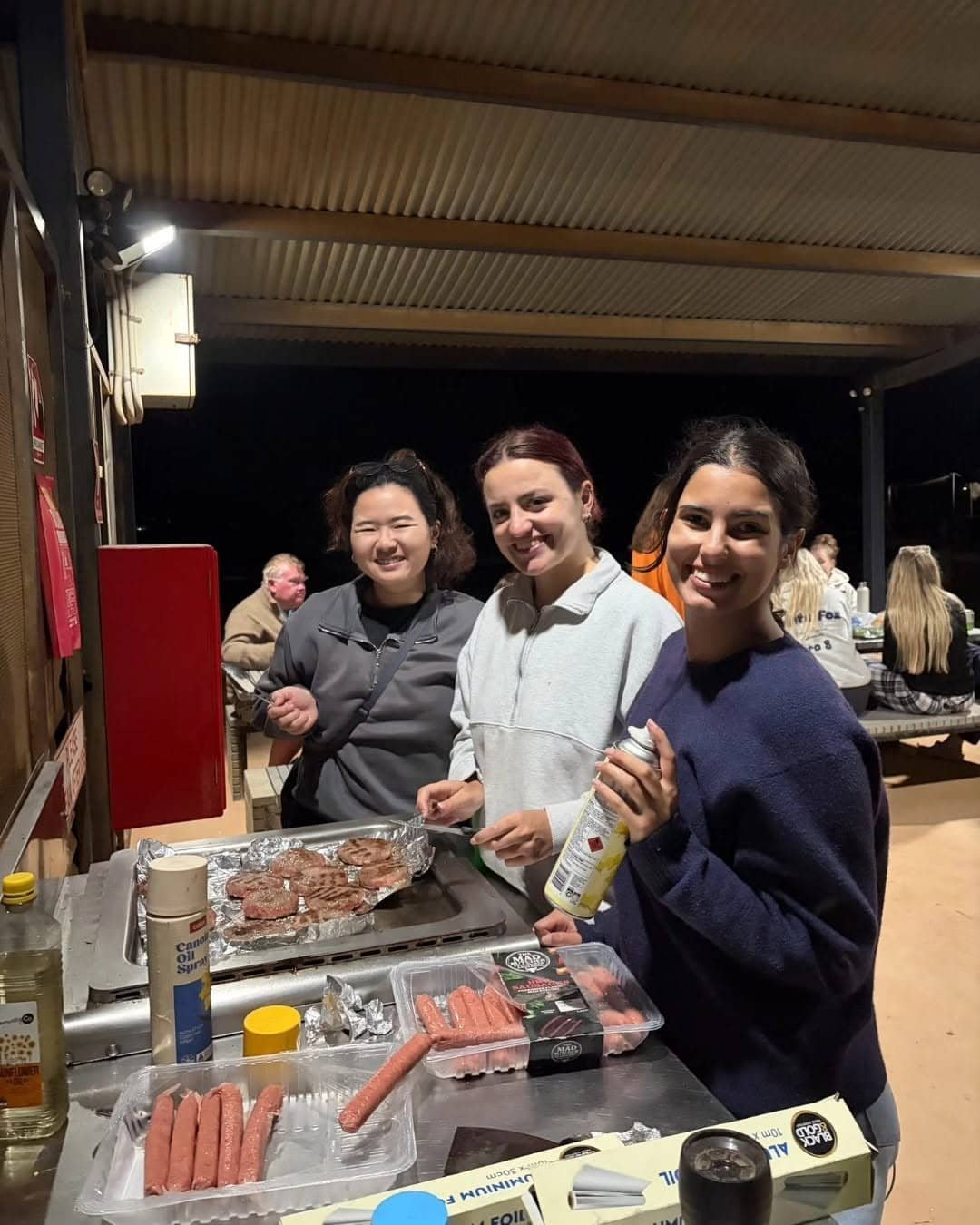
Or you might eat a lot of pesto pasta.
Snacks, drinks, coffees and personal treats are generally easier to keep separate.
Before the first supermarket stop, it helps to agree on a rough daily food budget and discuss any dietary requirements.
One of our repeat travellers, Cristina, explained how her groups managed different food preferences and spending budgets.
What Our Travellers Say
I didn’t know any of the people in the groups I traveled with and I still had a good time. I think partly because they were people similar to me, solo travellers, with the desire to meet other people and share beautiful moments in wonderful places.
When it comes to organizing food and camping, we have always managed to come to an agreement in one way or another, even when I have traveled with some vegetarian and vegan people. There were those who wanted/could spend a little more money and those who want to save it. The important thing has been knowing how to compromise! 🙂
Cristina
Share Bus traveller. Three trips completed when she wrote this review, with two more booked.
Cristina’s experience is a good example of what makes group travel work. Different food preferences and budgets do not automatically create problems, provided everyone is prepared to communicate and compromise.
Are your dates and route actually the same?
If one person needs to be in Broome for a flight on Friday and another wants extra days in Karijini, somebody will need to compromise.
With Facebook groups and travel apps, matching the destination is only part of it. The dates need to work as well.
Share Bus fixes the start and finish place and date before you book. The route in between stays flexible, so the group still has room to change plans together.
Who is driving?
Australia has some long driving days.
If you are joining someone’s car, check who can legally drive it, whether everyone is insured and whether the owner is actually happy to share the wheel.
On Share Bus, each traveller signs their own rental agreement and chooses to be a driver or non-driver. Driving is not compulsory, and eligible drivers can share it.
That is much easier than building the entire road trip around one person and their car.
Does everyone actually want to camp?
Some travellers love free camps and simple facilities. Others discover fairly quickly that they would prefer a hot shower and a proper bed.
It is worth finding this out before you leave.
Share Bus is clearly a camping road trip from the start. Tents, mattresses, cooking equipment and the main camp set-up are supplied, so everyone joining knows what they are signing up for.
How much planning do you want?
Some people plan every stop. Others decide where they are sleeping that afternoon.
Share Bus sits somewhere in the middle.
Every group gets a recommended itinerary with locations, free and paid campsites and activities, but it is not a guided tour. You have a plan to start with and the freedom to change it together.
Most groups follow approximately 80–90% of the recommended itinerary, with changes such as adding a new hike, stopping at a different attraction or choosing another campsite.
Sometimes the changes are bigger. On loop trips, groups occasionally decide to travel in the opposite direction to take advantage of better weather.
For example, Esperance is normally one of the final stops on the South West Loop. If the weather forecast is looking better at the beginning of the trip, the group might decide to visit Esperance first instead.
This flexibility is one of the reasons people choose Share Bus instead of a traditional guided tour.
One traveller, LA, described the benefit of having the practical parts of the trip organised while still being able to make decisions with the group.
What Our Travellers Say
Really great experience. They think of everything, from routes and packing to sharing the trip with new mates. I’d definitely recommend Share Bus if you want to meet new people and travel affordably without the stress of organising everything yourself, while still having the freedom to make the trip your own. Thanks for a great trip!
LA
Share Bus traveller. Review lightly edited for readability.
That balance is what Share Bus is designed around. You get a recommended route and the equipment you need, without losing the freedom to make the trip your own.
A few safety basics when finding travel buddies online
If you meet somebody through Facebook or an app, have a video chat or meet somewhere public first.
Tell someone you trust who you are travelling with and where you expect to be. If you are joining a private vehicle, ask about ownership, insurance, fuel and what happens if the car breaks down.
Travel buddy platforms can make the introduction easier, but you are still arranging a trip with someone you have probably never travelled with before.
Share Bus removes some of those unknowns because the trip, vehicle and equipment exist independently of any one person in the group.
You should still read your rental agreement and discuss expectations with the other travellers before departure.
Our pick: choose the trip first
Hostels, Facebook groups and travel apps can all work. Plenty of great Australian road trips start that way.
They just require a few things to fall into place at once. You need to meet someone you get along with, who is free at the same time, wants to go to the same places, has a similar budget and has access to a suitable vehicle and equipment.
Share Bus works the other way around.
Pick the road trip you want, and we find the group. The minibus, camping equipment and recommended itinerary are already there, and most people joining are solo backpackers in the same position.
You might arrive not knowing anyone.
After a week or two of camping, cooking, driving and working out where everyone left their shoes, that usually changes.
Choose your road trip. We’ll find your travel buddies.
FAQs about finding travel buddies in Australia
What is the best way to find travel buddies in Australia?
If you want to take an Australian road trip, Share Bus is our number one option because the route, dates, vehicle and camping equipment are organised alongside the group. Hostels, Facebook groups and travel buddy apps are also useful, particularly when your plans are still flexible.
Can I join Share Bus by myself?
Yes. Approximately 80–90% of Share Bus bookings are made by solo travellers. You choose your trip and Share Bus finds the rest of the group, then organises a WhatsApp chat and tries to arrange a meeting before departure.
What age are most Share Bus travellers?
Share Bus travellers are generally around 19 to 33 years old, with an average age of about 25. Most are long-term backpackers or travellers in Australia, including many people on working holiday visas.
Where do Share Bus travellers come from?
Share Bus groups include travellers from all over the world. The exact mix changes with every departure.
Are travel buddy apps safe?
They can be useful, but you should still speak with the person first, meet publicly where possible and make sure you agree on your route, dates, budget and transport arrangements before leaving.
How do I find people travelling the same route in Australia?
Route-specific Facebook groups and travel buddy apps are useful when you already know where you want to go. With Share Bus, you choose an existing trip and departure date, so the people joining your bus are already travelling the same route at the same time.
What should I ask a potential travel buddy before a road trip?
Talk about your dates, budget, route, driving, camping and how much planning you both expect to do. These are usually more important than having exactly the same hobbies or personality.
How much extra money should I budget for a Share Bus trip?
For a low-spend trip, we recommend allowing around $10–15 per day for food and an average of $15 per day for a mixture of paid and free campsites. Optional tours, meals out, drinks and other personal expenses are extra.